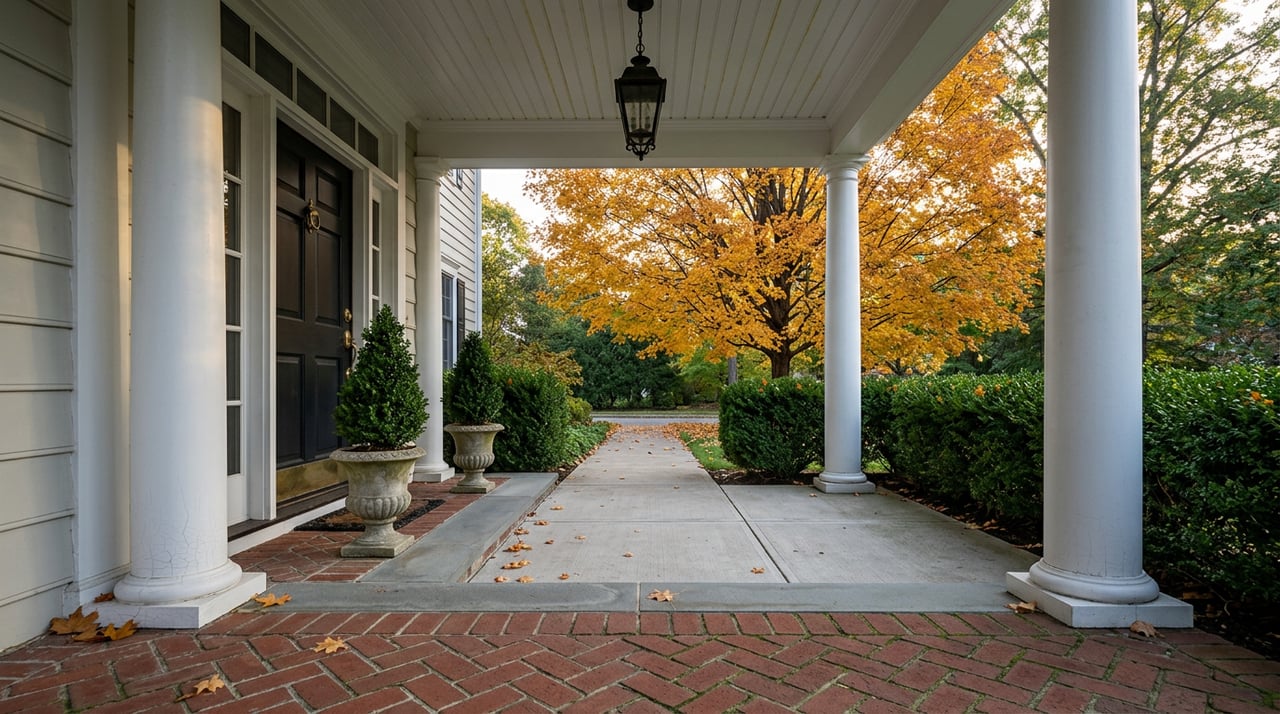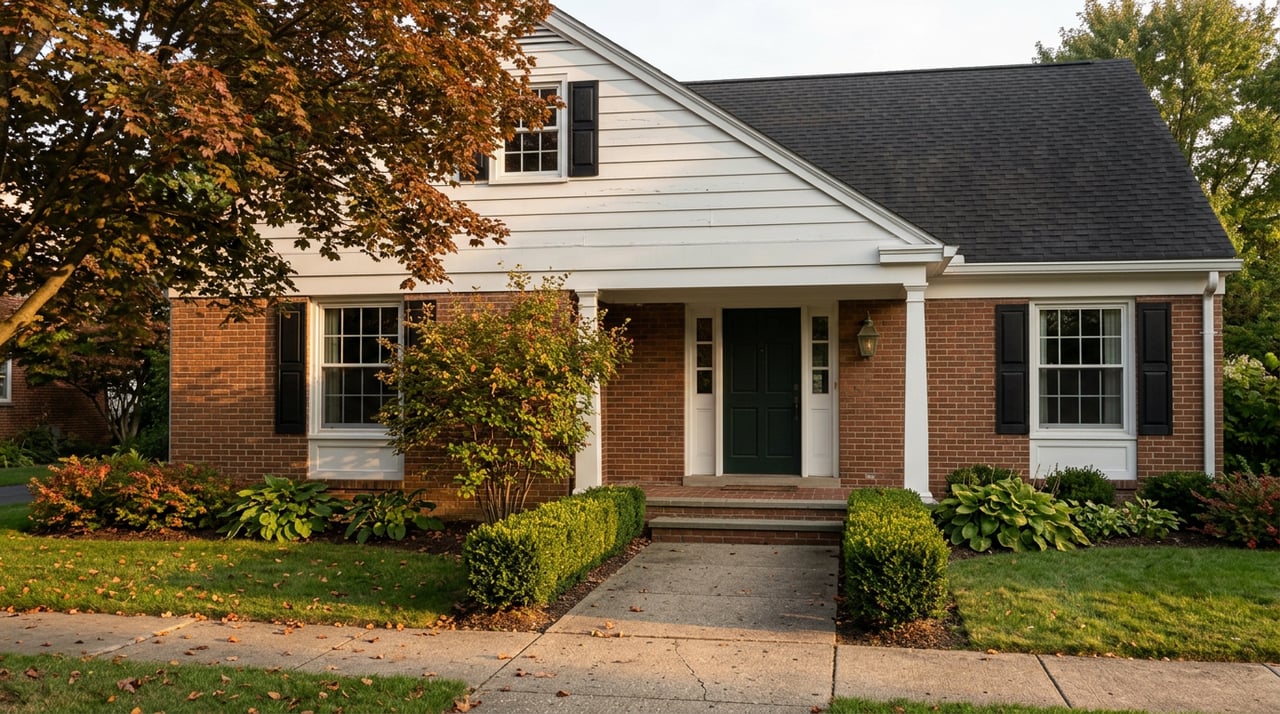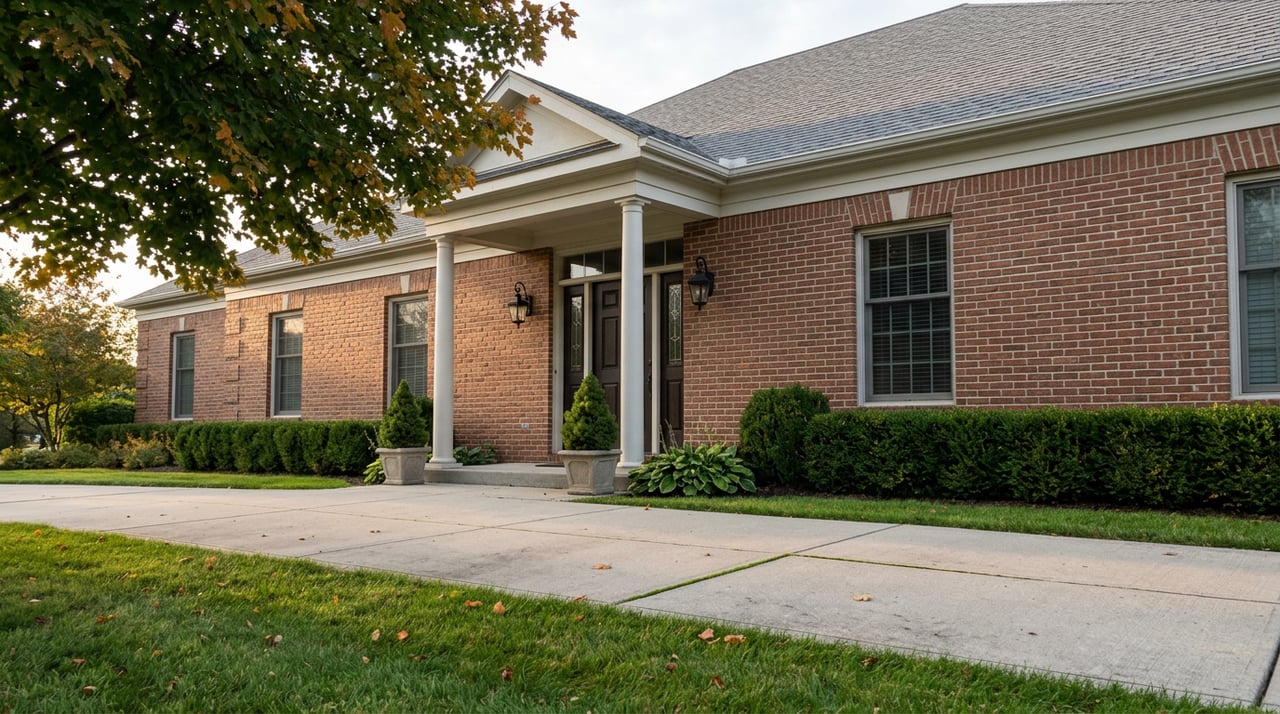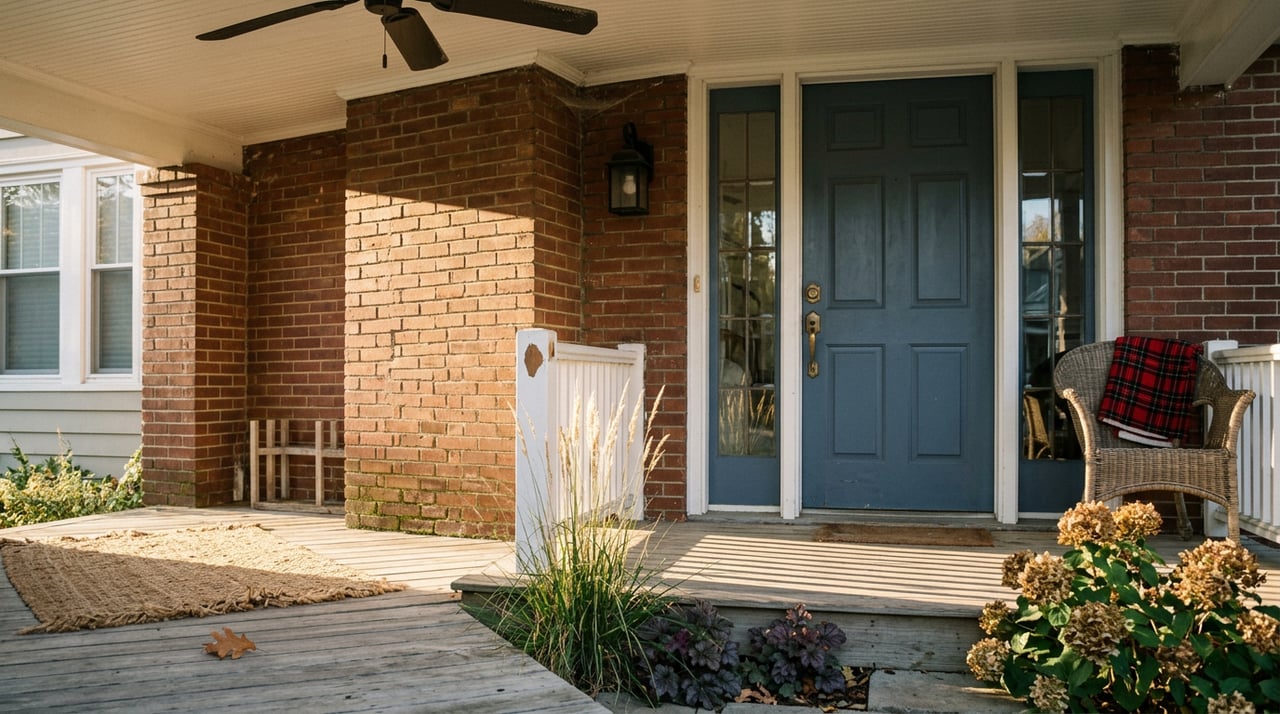
Bull Valley has no Main Street to walk down, no coffee shop with a regular crowd, no restaurant strip worth driving in for. Ask someone who lives here what there is to do and they will probably describe something at the edge of the village rather than in the middle of it, because the middle of it is mostly lawn, tree line, and the occasional horse. That absence is not an accident. When residents voluntarily rezoned about 3,000 acres to a 3-acre minimum back in 1955, and county planners recommended 5-acre estate tracts for the area in 1961, they were choosing low density over a commercial core. Seventy years later, the choice still shows.
What fills the space instead is a short list of institutions that are specifically Bull Valley's own, not shared regional amenities the village happens to sit near. Right now, in the second half of August, three of them are all in motion at once, and understanding what actually belongs to the village, as opposed to what only looks like it does, tells you more about how the place runs day to day than its zoning history does.
A Private Course That Goes Semi-Public Every Summer
For most of the year, Bull Valley Golf Club functions the way a private club is supposed to: members, guests, league play, banquets in a 37,000-square-foot clubhouse built around a two-story stone fireplace. But every summer the course also becomes a competitive stage that pulls players in from well outside the village, because the club takes on hosting duties for real qualifying events.
This year's calendar included:
- Junior PGA Championship Qualifier, June 29 and 30
- Illinois Open Qualifier, July 29
- Men's and Ladies' Club Championships, August 1 and 2
- CDGA Net Series Event, August 3
- Couples Championship, August 29
- Fall Member-Guest, known internally as the Rodeo, September 24 and 25
As of today, the qualifiers and the club championships have already come and gone. What is still ahead is the Couples Championship in twelve days and the Rodeo in early autumn. For a village of roughly 1,130 people, having a course that briefly hosts a national junior qualifier and a state open qualifier in the same summer is a strange kind of civic identity: most of the year nobody outside the membership thinks about the course at all, and then for a handful of days a year it puts Bull Valley's name on golf schedules well beyond McHenry County.
That exclusivity is worth noting because it sets up a contrast with the rest of the village's outdoor life, which runs in exactly the opposite direction. The land that is genuinely open to anyone in Bull Valley is smaller, quieter, and far less publicized than the golf course, and most people who live here are pointed toward the wrong preserve when they think about where to walk.
The Preserve That's Actually Yours
Ask a Bull Valley resident where they hike and the answer is usually Pleasant Valley, the McHenry County Conservation District's second-largest holding at 2,080 acres, with more than five miles of looped trail, a natural amphitheater, a two-acre fishing pond, two picnic shelters, and a solar-lit path used for cross-country skiing in winter. It is a genuinely spectacular site, shaped by glacial retreat and layered with history that includes a decades-long run as a summer camp for inner-city youth. It is also, by mailing address, in Woodstock.
The site actually addressed inside Bull Valley is smaller and gets a fraction of the attention: Coral Woods Conservation Area, at 916 N Cold Springs Road. It covers 608 acres, roughly a quarter the size of Pleasant Valley, with a 1.98-mile hiking trail, a 1.3-mile horse trail link for local riders, wildlife-viewing scopes, and an observation deck built for picnicking rather than programming. There is no amphitheater, no pond, no ski loop. It is scaled the way the village itself is scaled: modest, low-traffic, built for people who already know it is there rather than for visitors driving in from three towns over.
The gap between the two sites is the more useful fact than either one alone. Pleasant Valley draws crowds because it is bigger, better equipped, and better known, and it is worth the trip regardless of address. But Coral Woods is the piece of protected land that sits inside the village's own footprint, matching the same low-density, minimal-disturbance instinct that shaped Bull Valley's zoning seventy years ago. If Pleasant Valley is where you go for a real hike, Coral Woods is closer to what the village actually looks like when you strip out everything borrowed from somewhere else.
The Landmark That Doubles as Village Hall
The same pattern shows up in the building that runs the village's business. Bull Valley's government and police department are headquartered inside the George Stickney House, a structure that has been listed on the National Register of Historic Places since 1979. The house was built for George and Sylvia Stickney, both committed followers of Spiritualism, and its interior was designed without square corners, since the couple believed spirits could become trapped in right angles. That detail is the reason most search results and ghost-story sites treat the building as a curiosity first and a functioning government office second.
What gets less attention is the maintenance story, which has been running quietly since long before most current residents moved in. The Stickney House Foundation was established in 1991 to fund and manage the restoration, and volunteers have kept at it for more than three decades, replacing all fifteen windows with period-appropriate materials, using roughly 2,700 vintage bricks in a 2002 repair to match the original construction, and funding the work in small increments rather than through a single grant. In 2022 the village board brought in the School of the Art Institute of Chicago to help chart the next phase, according to reporting in the Woodstock Independent. The McHenry County Historical Society has reported more than $250,000 spent so far just to keep the structure standing, most of it on repairs the public will never notice from the road.
The foundation's stated goal is to eventually turn part of the building into a museum or community space for the village. For now, the second-floor ballroom where the Stickneys once held their seances remains closed to the public, still considered too fragile to open. It is an odd thing to realize about the building where your speeding ticket gets processed: the village hall is also a thirty-year restoration project that nobody is in a hurry to finish, because finishing was never really the point.
The Pattern Underneath All of This
None of these three things map onto how most small Illinois villages spend a season. There is no farmers market pulling in the golf calendar, no downtown tying the preserve to the landmark. What connects them instead is that each one is genuinely, specifically Bull Valley's, not a regional amenity the village happens to border. The golf club briefly becomes a stage for outside competition and then goes quiet again. The conservation land most residents think of as their own actually carries a Woodstock address, while the smaller preserve that does sit inside the village gets almost no attention. The building that runs the village's paperwork has been under patient, underfunded restoration since before most current homeowners arrived, and the people doing that work have never treated slowness as a problem to solve.
That is the version of Bull Valley that does not show up in a drive-by. It is a village that keeps a small number of things entirely its own and takes its time with all of them.
If you have lived here long enough to notice this rhythm, you already understand why people who move to Bull Valley tend to stay for decades, and why those who eventually do sell often come to us first for a straight read on the market rather than a generic listing pitch. Team Open Doors has spent years paying attention to the specific things that make this village different from the rest of McHenry County. When the time comes to make a move, get your free home valuation and let's talk about what's next.