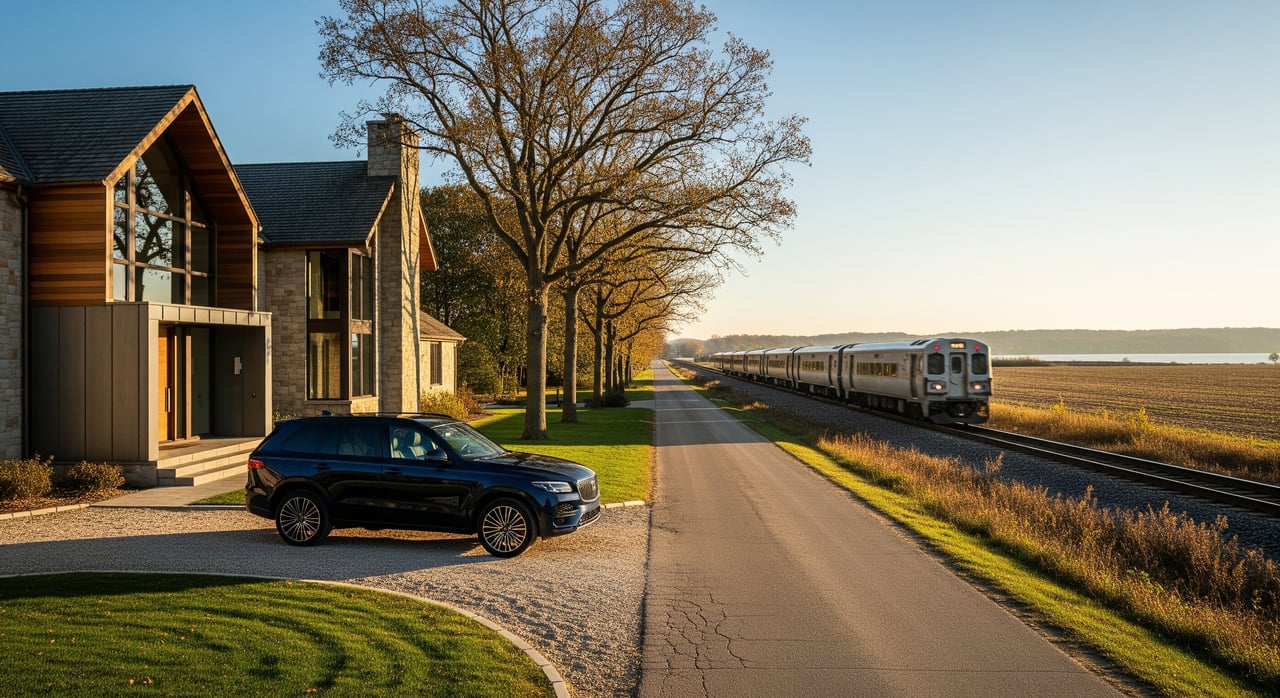
Wondering if you can live in McHenry County and still have a smooth commute to Chicago? You’re not alone. Many buyers love the space, value, and community feel here, yet need a reliable way to get downtown. The good news is you have strong options, and the best choice depends on your work hours, flexibility, and budget.
In this guide, you’ll compare Metra’s UP‑NW line from Crystal Lake and Woodstock with driving on I‑90, including timing windows, costs, parking, and real-life tradeoffs. You’ll also get a simple checklist to test your routes before you buy. Let’s dive in.
Your main commute options
Metra UP‑NW to downtown
Metra’s Union Pacific Northwest (UP‑NW) line runs to Chicago’s Ogilvie Transportation Center and serves McHenry County with stations such as Crystal Lake and Woodstock. Service is strongest during peak hours, with more inbound trains in the morning and outbound in the evening. For current stops and departure times, check the official Metra UP‑NW timetable.
What you get with Metra:
- Predictability during peak windows
- No downtown parking hassle
- Time to read, work, or relax
Driving via I‑90 (Jane Addams)
I‑90 is the primary express route toward the city. Your door‑to‑door time depends on where you start in McHenry County, which on‑ramps you use, and your downtown destination. Off‑peak drives can be quick, but rush-hour travel can vary day to day. For travel tools and construction advisories, use the Illinois Tollway.
What you get with driving:
- Door‑to‑door flexibility
- Potentially faster trips off‑peak
- Easy access for mid‑day meetings
A hybrid approach
Many professionals mix modes. You might drive and park at a station with better lot availability, or ride Metra most days and drive when your schedule is irregular. For first and last mile connections, check Pace Suburban Bus and consider drop‑offs, biking, or ride‑hail.
Metra from Crystal Lake and Woodstock
Service patterns to know
- Weekdays: More inbound trains early morning and more outbound in the late afternoon and early evening. Midday and late-night service is lighter.
- Weekends: Fewer trains and different stop patterns.
- Local vs express: Some trains skip stops and arrive faster. If minimizing time is a priority, identify one or two express options that line up with your work hours.
- Reliability: Metra generally posts strong on‑time performance, but winter weather or freight corridor incidents can cause delays. Use alerts and plan a quick backup.
Always verify your times on the current UP‑NW schedule before you plan a routine.
Typical ride times
- Crystal Lake to downtown Chicago: often under an hour to about an hour, depending on train type and time of day.
- Woodstock to downtown Chicago: generally longer than Crystal Lake. Plan to add about 15 to 30 minutes relative to Crystal Lake trains, depending on the departure.
Treat these as approximate ranges and confirm exact ride times for the trains you plan to use. If you have a key meeting, aim for an earlier train as a buffer.
Fares, passes, and payment
Metra uses a zone‑based fare system. Monthly passes typically offer better value if you ride most weekdays. Employers sometimes subsidize commuting or offer pre‑tax benefits, which can reduce your cost. Review current options on Metra fares and passes and check what your employer provides.
Station parking and permits
Parking is managed by each municipality, so rules and availability vary by station and lot. Common setups include monthly permit lots, daily pay lots, and on‑street municipal parking with time limits. Before you count on a specific lot, verify:
- Permit requirements and enforcement times
- Waitlists or limited monthly spaces
- Daily rates and payment methods
- Overnight or weekend rules
Start with the City of Crystal Lake’s municipal site and the City of Woodstock’s municipal site for local commuter parking details and contacts.
First and last mile options
A short drive, drop‑off, or ride‑share to the station is common. Some stations are served by Pace routes; check Pace Suburban Bus for schedules and connections. If you prefer biking, confirm bike racks or locker availability at your station and bring a reliable lock.
Driving I‑90: what to expect
Peak windows and variability
- Morning inbound: congestion is common roughly 6:30 to 9:30 AM on I‑90 and the Kennedy. Incidents or weather can extend this window.
- Evening outbound: delays often run 3:30 to 7:00 PM heading out of the city, with slowdowns on ramps and the Kennedy.
- Off‑peak and weekends: typically lighter and more predictable, though construction or major events can add delays.
Plan for variability. A drive that takes 45 to 75 minutes in light conditions can stretch to 90 minutes or more at peak. For interviews or key meetings, add a 20 to 40 percent buffer.
Tolls and costs
I‑90 is a tollway. Your total cost depends on entry and exit points, vehicle type, and whether you use an I‑Pass or pay‑by‑plate. Transponders usually offer lower rates. Factor in fuel, parking in Chicago, and vehicle wear. Check current toll rates and travel advisories with the Illinois Tollway.
Tools for planning
- Real‑time navigation apps for routing
- Illinois Tollway cameras, alerts, and construction updates
- Employer policies for parking or transit benefits
Before you lock in a routine, run a few test drives at your actual start times and compare them with a train day for apples‑to‑apples timing.
What is fastest for you? Three scenarios
Peak‑hour office days
If you work a standard 9 to 5 and need predictable arrival times, a well‑timed Metra train often wins for consistency. Identify two morning inbound options and two evening outbound options that fit your schedule. If you can pair a monthly Metra pass with a reliable parking plan at Crystal Lake or Woodstock, you get a steady door‑to‑door rhythm.
Flexible schedule or frequent mid‑day meetings
If your workday shifts or you bounce between downtown and suburbs, driving can offer the control you need. You might still ride Metra on days with fixed office time and drive when meetings cluster. Keep an eye on construction alerts and choose an I‑Pass to streamline tolls.
Off‑peak or reverse commute
If you travel opposite the rush or outside peak windows, both Metra and I‑90 can be efficient. Check reverse‑commute train options on the UP‑NW timetable and compare your door‑to‑door time with a test drive outside peak periods.
7‑step planning checklist
Confirm your closest stations. Map your prospective home to Crystal Lake or Woodstock station and estimate the drive or bike time.
Pick your trains. Choose 1 to 2 target morning inbound and evening outbound trains that fit your work hours. Save a backup option.
Verify parking. Contact the city or review municipal pages to confirm permit availability, rates, and payment. Start with Crystal Lake and Woodstock resources.
Compare monthly costs. Stack up a Metra monthly pass plus station parking against fuel, tolls, and downtown parking. Include any pre‑tax commuter benefits.
Run time trials. Do a weekday morning and evening test by train and by car to measure true door‑to‑door time and stress level.
Check toll rates and set up I‑Pass. Use the Illinois Tollway to review tolls, cameras, and alerts for your route.
Plan first and last miles. Review Pace Suburban Bus options, explore drop‑offs, or set up a bike and secure lock.
Local resources to bookmark
- Metra UP‑NW timetable for current train times
- Metra fares and passes for monthly pass and payment options
- Illinois Tollway for toll rates, travel times, construction alerts, and cameras
- Pace Suburban Bus for first and last mile connections
- City of Crystal Lake and City of Woodstock for commuter parking rules, permits, and lot maps
Final thoughts
There is no single best commute, only the best commute for your routine. If you want predictability during rush hour, Metra’s UP‑NW line from Crystal Lake or Woodstock is hard to beat, especially with a monthly pass and a solid parking plan. If your schedule shifts or you travel off‑peak, I‑90 can be faster and more flexible. Most buyers find that a hybrid approach covers all scenarios.
If you are planning a move, do a timed test commute before you pick a neighborhood. If you want help mapping commute times to specific homes, reach out to Kim Keefe for a local, commute‑first home search and on‑the‑ground guidance.
FAQs
How long is the commute from Crystal Lake to downtown Chicago by train?
- Typical rides often range from under an hour to about an hour, depending on the specific train and whether it is express or local. Always verify exact times on the current UP‑NW timetable.
How long is the commute from Woodstock to downtown Chicago by train?
- Plan for a longer ride than Crystal Lake, generally about 15 to 30 minutes more depending on the train. Check the current schedule for exact departures and travel times.
What are typical I‑90 drive times to the Loop from McHenry County?
- In light conditions, some trips can be 45 to 75 minutes. During peak congestion or incidents, expect 90 minutes or more. Add a buffer of 20 to 40 percent during rush hour.
Are Metra monthly passes worth it for daily commuters?
- If you ride most weekdays, a monthly pass often lowers your per‑trip cost. Compare the pass plus station parking to your estimated tolls, fuel, and downtown parking.
Is station parking guaranteed at Crystal Lake or Woodstock?
- No. Each lot has its own rules and capacity. Confirm permit availability, daily rates, enforcement times, and payment methods with the city before you rely on a specific lot.
When is I‑90 traffic usually worst?
- Inbound mornings are commonly busiest between about 6:30 and 9:30 AM. Outbound evenings are often heavy from 3:30 to 7:00 PM. Incidents and weather can extend these windows.
How do I reduce toll costs on I‑90?
- Use a transponder if eligible, since it often provides lower rates than pay‑by‑plate. Check the Illinois Tollway for current toll information and account setup.
What if my work hours vary or I have mid‑day meetings?
- Consider a hybrid commute. Ride Metra on fixed office days and drive when your schedule is irregular. Keep a backup train option and monitor real‑time traffic.